
Waking Up with Back Pain?
Your mattress, sleep position, and level of support directly affect how comfortable you feel in the morning. Learn what to look for in a restorative sleep system.

Spinal Support Principle
When your mattress supports your body evenly, muscles relax completely, allowing spinal discs to recover overnight.
How Your Mattress Affects Sleep Comfort
When you lie down for 7 to 8 hours, your mattress should maintain natural posture and relieve joint strain. Common support flaws include:
Midsection Sagging
Older mattresses often bow in the middle, forcing the lower back into a swayback curve that strains lumbar muscles.
Uncomfortable Pressure Points
An unyielding, hard surface concentrates pressure on shoulders and hips, restricting circulation and causing tossing and turning.
Mismatched Sleeping Position
A side sleeper on an extra-firm mattress will twist their spine, while a stomach sleeper on a soft bed will sink too deeply.
Aged Internal Materials
Even premium mattresses lose core elasticity over 7–10 years, resulting in uneven micro-support across the sleep surface.
Important Medical Disclaimer
Persistent, severe, or shooting back pain should be evaluated by a medical doctor, physical therapist, or spine specialist. While a supportive mattress promotes comfortable resting alignment, it is not a medical treatment for spinal injuries or disc disorders.
Key Features for Mattress Support & Relief
Discover the four essential elements that create a balanced, supportive mattress.
Proper Spinal Alignment
A supportive core holds your head, neck, spine, and pelvis in a straight line (when side sleeping) or a natural "S" curve (when back sleeping).
- Prevents awkward lateral curvature during sleep
- Allows back muscles to fully relax and rest
Targeted Pressure Relief
Materials like TEMPUR-Material™ or high-density gel memory foam cushion prominent joints like shoulders and hips, distributing body weight evenly.
- Eliminates painful localized pressure hot spots
- Reduces midnight toss-and-turn frequency
The Right Firmness Level
Firmness is subjective and depends on body weight and sleep position. Medium-firm options statistically satisfy the broadest range of back support needs.
- Balancing surface plushness with deep structural core support
- Options ranging from soft to ultra-firm in store
Adjustable Position Elevation
An adjustable base elevates your legs and torso slightly to flatten lower lumbar stress, simulating weightless spinal decompression.
- Zero-Gravity preset takes pressure off lower back
- Makes sitting up to read or relax seamless
Matching Support to Your Sleep Position
Every sleep position requires a slightly different balance of cushioning and core resistance.
Side Sleepers
Requires deeper pressure relief at shoulders and hips so the spine stays straight without bowing sideways.
Back Sleepers
Requires lumbar contouring that fills the space under the lower back while supporting hips without deep sinking.
Stomach Sleepers
Needs firm midsection support to prevent torso dipping, which twists the spine into an unnatural arch.
Combination Sleepers
Benefits from responsive hybrid surfaces with pocketed coils that adapt quickly as you change positions.
Supportive Sleep Systems at The Mattress Store
Our sleep specialists help you test posture and pressure relief across top national mattress brands in St. George, Washington, and Cedar City.
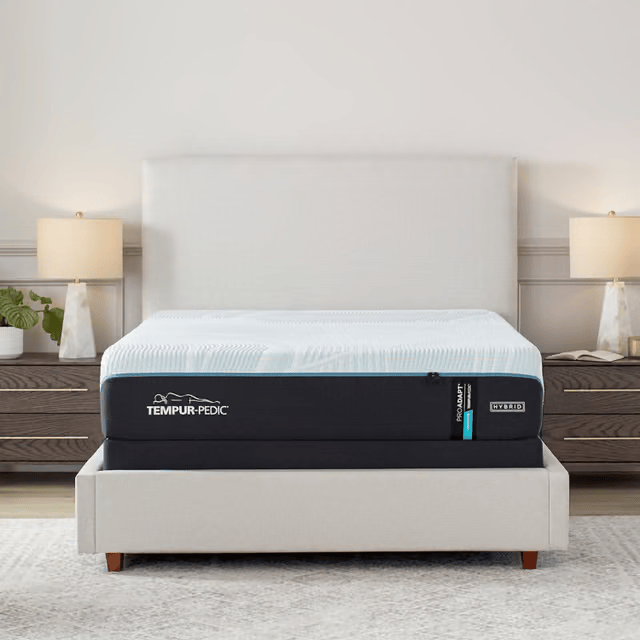 Adaptive Pressure Relief
TEMPUR-Adapt® Hybrid
NASA-developed TEMPUR-Material™ adapts precisely to body weight and shape for ultimate pressure relief over 1000+ premium coils.
 Balanced Hybrid Comfort
DreamCloud Classic Hybrid
Combines cashmere-blend quilting with targeted lumbar foam support and pocketed innersprings for medium-firm alignment.
 Lumbar Decompression
Ergonomic Power Bases
Custom head and foot elevation base systems allow Zero-Gravity resting to reduce lower back compression.
Tips for More Comfortable Sleep Alignment
Pillow placement habits to support your back starting tonight
1Pillow Between Knees (Side)
If you sleep on your side, place a firm pillow between your knees to keep your pelvis and lumbar spine level throughout the night.
2Pillow Under Knees (Back)
Back sleepers can place a small pillow under their knees to maintain the natural lumbar arch and ease strain on hip flexors.
3Proper Neck Pillow Height
Ensure your head pillow supports cervical curvature without proping your chin too far forward or letting it tilt backward.
4Check for Mattress Sagging
Remove sheets and lay a straight edge across your mattress. Any indentation deeper than 1.5 inches signals loss of core support.
Frequently Asked Questions About Back Support
Have Questions About Your Sleep?
Want help exploring your options for Back Pain? Leave your information and a local sleep specialist from The Mattress Store team will reach out.